
SOLID vs LSR SILICONE
Why ±30μm Precision in Solid Silicone is a Game-Changer for Engineers
In the world of high-precision engineering, Liquid Silicone Rubber (LSR) is frequently marketed for its ±0.01 mm tolerance. However, at Vina Rubber, we have mastered High Consistency Rubber (HCR) to achieve an ultra-precision tolerance of ±0.03 mm (30μm).
While the industry often chases marginal gains in precision, we focus on the “Mechanical Backbone” of the component. Our HCR solutions offer a superior balance of micro-precision and rugged durability that LSR simply cannot match.
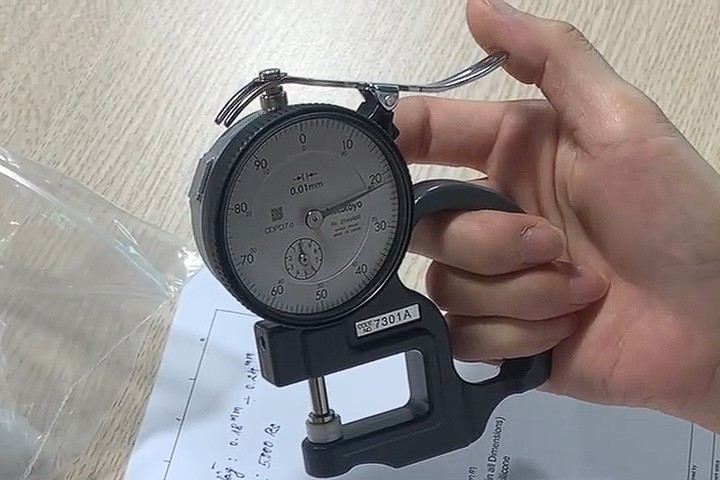
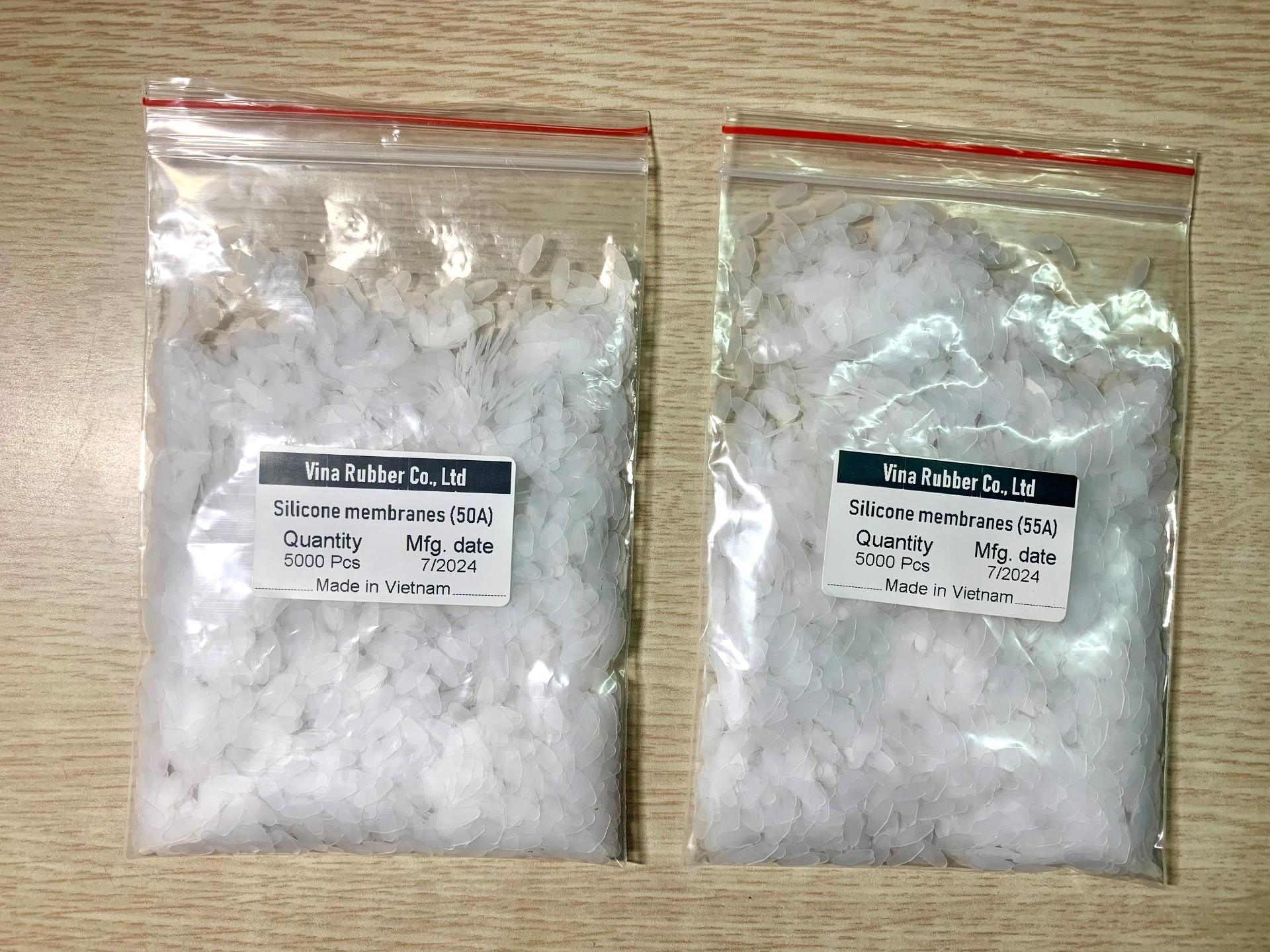
Our verification process of 0.21±0.03 mm precision for Memetis GmbH’s micro-valve systems
1. Tensile Strength: Power Under Pressure
The structural integrity of a component under tension is its first line of defense.
- HCR (Solid Silicone): Boasts a tensile strength of 9.0-10.0 MPa. This high molecular weight structure makes it incredibly resilient against snapping under extreme stretching.
- LSR (Liquid Silicone): Typically ranges much lower, between 5.0-7.0 MPa.
- The Verdict: HCR provides nearly 40% more strength. For valve membranes or high-pressure seals, this translates to a significantly wider safety margin.
2. Tear Resistance: The “Anti-Notch” Advantage
Engineers know that LSR can be “notchy”—a tiny surface nick can quickly propagate into a total part failure.
- HCR Tear Strength: Reaches 35-45 kN/m. Its long-chain polymer structure acts as a natural barrier, stopping tears before they start.
- LSR Tear Strength: Generally lingers around 15-25 kN/m.
- Application: In critical environments like Ultra-Thin Silicone Membrane (Memetis) or Medical Gaskets (Simport), HCR’s superior tear resistance is the only logical choice for long-term reliability.
3. Elongation at Break: Flexibility Without Failure
Precision parts must often deform and return to their original shape without losing seal integrity.
- HCR Elongation: Achieves 450-600%, allowing the material to endure severe mechanical cycles.
- LSR Elongation: Typically falls within 300-500%.
- HCR’s ability to stretch further before breaking ensures that components like micro-valves for Memetis maintain peak performance even under irregular load spikes.
4. Precision Meets Reality: The 30μm Sweet Spot
Achieving ±0.03 mm (30μm) with HCR delivers what we call “Functional Equivalence” to LSR’s 10μm precision, but with three distinct advantages:
- Superior Toughness: A part that survives harsher environments.
- Anti-Fatigue: Better resistance to repeated mechanical stress over time.
- Maximum Economy: A highly cost-effective production process with lower material and tooling overhead (CAPEX).
Conclusion: The Smart Choice for Global Engineering
If your project requires the precision of a Swiss watch but the toughness of a heavy-duty engine, don’t be misled by the “LSR hype.”
Vina Rubber’s Ultra-Precision HCR molding offers 10 MPa tensile strength and 45 kN/m tear resistance at ±0.03 mm (30μm) precision. It is, quite simply, the most economical and durable high-performance silicone solution on the market today.
| Technical Property | Vina Rubber HCR (Solid) | Standard LSR (Liquid) |
|---|---|---|
| Precision Tolerance | ± 0.03 mm (30 μm) | ± 0.01 – 0.02 mm |
| Tensile Strength | 9.0 – 10.0 MPa | 5.0 – 7.0 MPa |
| Tear Strength | 35 – 45 kN/m | 15 – 25 kN/m |
| Elongation at Break | 450% – 600% | 300% – 500% |
| Cost Efficiency | High (Optimized ROI) | Low (High Tooling & Material Cost) |